Public availability

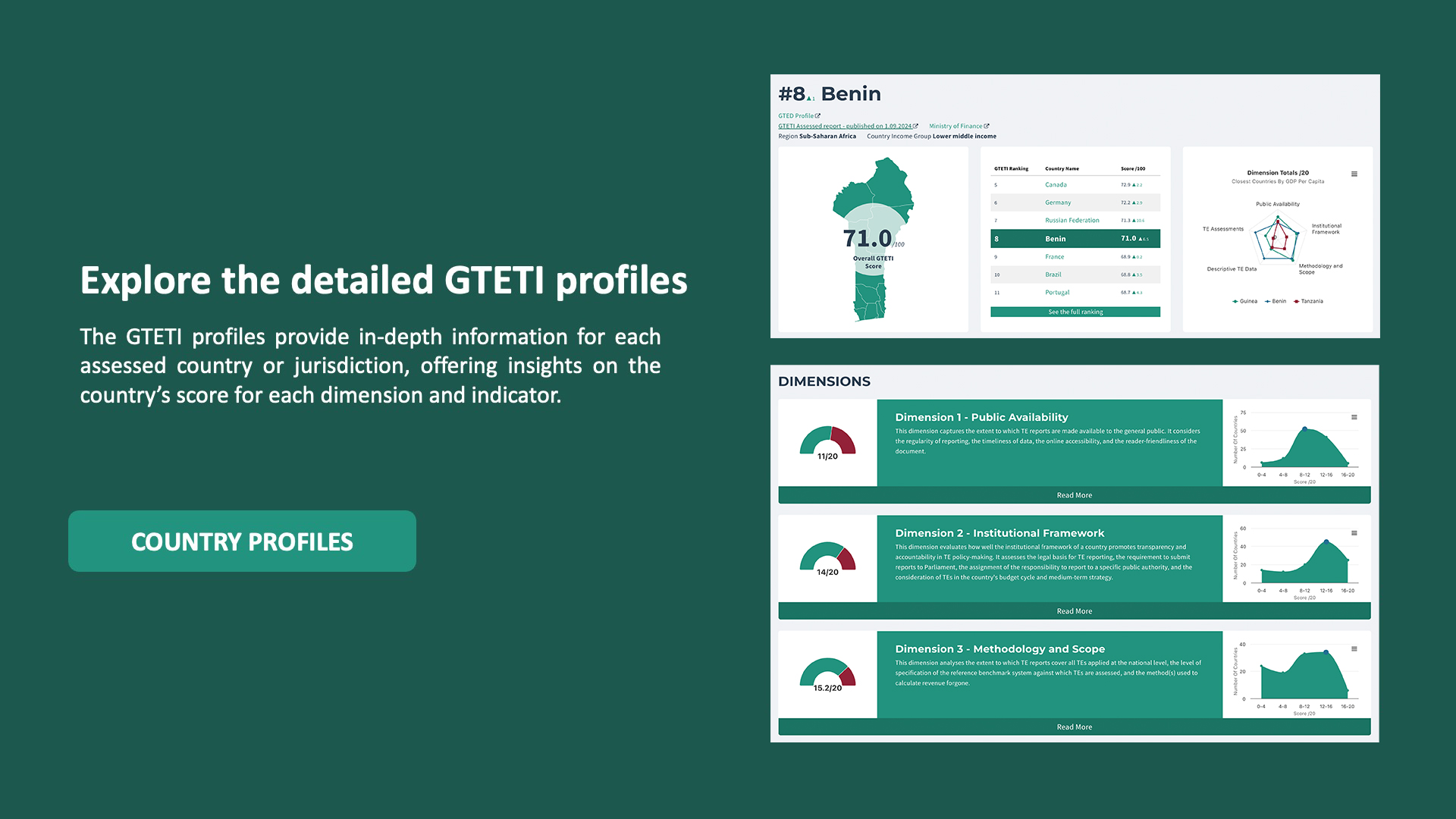
This dimension captures the extent to which TE reports are made available to the general public. It considers the regularity of reporting, the timeliness of data, the online accessibility, and the reader-friendliness of the document.

9 out of 10
jcountries follow an annual publication schedule, but 24 % report irregulary
60%
of jurisdictions have an online repository with all TE reports
17%
make their data available in excel or .csv format

Best practices by region

Overall

Top 5 best scores

Indonesia Flag Indonesia
Netherlands Flag Netherlands
Zambia Flag Zambia
Colombia Flag Colombia
Georgia Flag Georgia

1.1 Frequency and regularity - How regularly and frequently are TE reports published?

This indicator evaluates the frequency at which TE reports have been issued, and whether there are gaps, i.e. years where no TE report was issued. The time span covers the last 10 years, or every year after the year of publication of the first report.

1.2 Timeliness - Does the report (published in fiscal year t) provide data for the most recent fiscal year (t-1) ?

This indicator assesses whether, at the moment of publication (year t), TE reports contain the most up to date TE data, i.e. data for the previous year (year t-1).

1.3 Visibility - To what extent public authorities promote the visibility of TE reports?

This indicator measures the extent to which the relevant authorities (Ministry of Finance, tax authority, Parliament, etc.) promote the visibility of TE reports, for instance, by issuing a dedicated press release, or by creating a repository where all TE reports are hosted.

No Countries

1.4 Online accessibility - How accessible is the TE report and its underlying data online?

This indicator evaluates the ease with which TE reports (and the underlying datcan be found on official websites.

1.5 Reader-friendliness - To what extent is the report designed to be understandable by everyone?

This indicator evaluates the format in which TE data is published, checking key characteristics such as whether the information is consolidated in a single document or spread across different reports, whether the report includes a summary and whether acronyms are explained. It also assesses if countries publish a version of the TE report that facilitates understanding by visually impaired individuals.